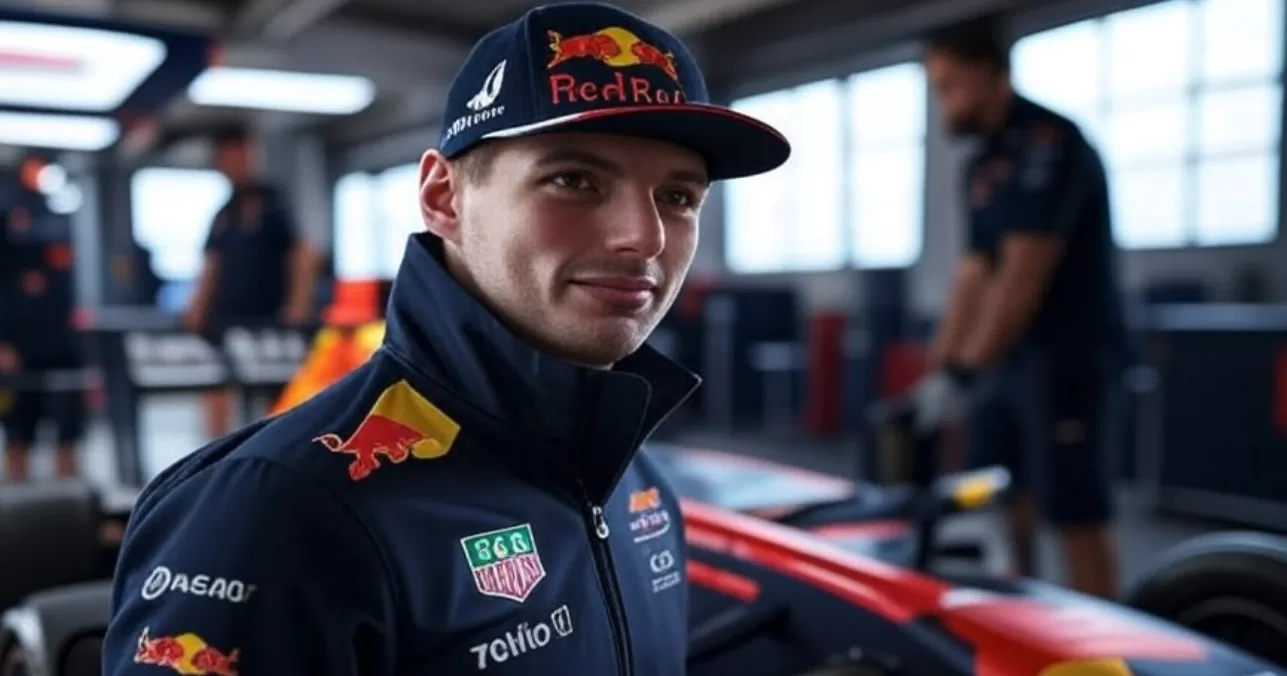
In the ever-volatile world of Formula 1, driver market rumors and team politics dominate headlines as much as race results. Speculation about Max Verstappen’s future beyond Red Bull Racing continues to simmer. While contractually bound until 2028, whispers of interest from rival teams—particularly Mercedes—have gained occasional traction. Yet, from both a competitive and strategic standpoint, it’s clear that Verstappen’s best path forward lies with Red Bull Racing.
Here’s why the reigning world champion should remain exactly where he is.
History Shows That Leaving Red Bull Rarely Pays Off
Red Bull Racing’s unique team environment fosters a distinct synergy. Its developmental philosophy and long-term investment in drivers contribute significantly to this. Such a synergy is difficult to replicate elsewhere. Historically, drivers who have exited Red Bull in search of greener pastures have struggled. They find it challenging to maintain the same level of performance.
Sebastian Vettel, for example, left Red Bull after four championships, only to find frustration and inconsistency at Ferrari. Daniel Ricciardo was once touted as a future champion. He experienced a career downturn following his departure. He cycled through Renault and McLaren with limited success. Even Pierre Gasly, after his Red Bull demotion, found some redemption at AlphaTauri. Nevertheless, he has yet to return to top-tier competitiveness.
These precedents underscore a key reality. Red Bull isn’t just a fast team. It’s a specialized environment that doesn’t always translate to success elsewhere. Verstappen, who has grown within the organization and shaped its current dynasty, risks entering a period of regression by leaving.
The Car Is Built Around Verstappen—Elsewhere, It Won’t Be
The car at Red Bull is built around Max’s driving style. This adaptation is one of the most critical advantages he enjoys. His preferences are prioritized. His preferences are prioritized. The team focuses on Max’s driving style. They ensure the car suits his driving preferences. The team has optimized its design philosophy to suit Verstappen’s preference for a sharp front end. It has also been tailored for aggressive turn-in and high-speed stability. These characteristics have helped him extract extraordinary pace over a race distance.
Verstappen might switch to another team. Whether it’s Mercedes or another, he would face a car engineered around someone else’s feedback. He would also have to adapt to another driver’s driving style and development trajectory. Even with immense talent, adaptation takes time, and performance is never guaranteed.
This is not simply a theoretical issue. It’s a strategic disadvantage that could compromise results in both the short and long term. In Formula 1, tenths of a second decide legacies. The perfect driver-car synergy Max has at Red Bull would be difficult, if not impossible, to quickly replicate elsewhere.
A Proven Engineer Relationship Is Invaluable—and Rare
The bond between driver and race engineer is crucial for success in Formula 1. It is also one of the least visible elements. Max’s long-standing relationship with Gianpiero Lambiase is not just functional—it’s deeply synergistic. Their communication style is efficient, trust-based, and resilient under pressure.
Contrast this with what we’ve seen at other teams. For example, consider Lewis Hamilton’s recent frustrations at Mercedes. There have been communication breakdowns and strategic misalignment. These issues have occasionally undermined race results. Changing teams would likely mean changing engineers or adjusting to a new environment where such mutual understanding doesn’t yet exist.
In an age that demands split-second decisions, engineer familiarity is essential. Tire whispering can win or lose races. It is not a luxury. Disrupting it could destabilize Max’s otherwise surgical race management.
Red Bull Is Still the Pinnacle of Performance
While F1 is cyclical and dominance never lasts forever, Red Bull’s current position at the top is no fluke. The team has mastered the ground-effect era under the 2022 regulations. Adrian Newey’s legacy provides strong technical leadership. The team has an elite operational structure and a well-funded development pipeline. Red Bull remains the benchmark for performance.
Even as Newey prepares to depart, Red Bull’s core team—Pierre Waché, Ben Waterhouse, Enrico Balbo—remains intact. There’s every indication that Red Bull is built for the present. It is also future-proofed for continued competitiveness. This is especially true with their 2026 power unit project.
Leaving this setup to join a rival still trying to close the gap could very well mean trading dominance for hope.
Loyalty, Legacy, and Logic
Max Verstappen has built more than just a winning career at Red Bull. He has built a legacy and a dominant era. It is a home tailored to his driving, decision-making, and long-term goals. Leaving now would pose performance risks. It would also dilute the competitive continuity that has enabled his rise to one of the sport’s greats.
Formula 1 history often rewards consistency over experimentation. For Max Verstappen, staying with Red Bull is not about complacency—it’s about strategic wisdom. The smartest move for his legacy is not to leave Red Bull Racing. Staying will benefit his championships and his career. He should keep driving it forward.
Interested in reasons why Max might choose Aston Martin any way? Check out our blog discussing why he would move from Red Bull.
Listen to all episodes of our podcast which is available on all major platforms.

[…] If you’re interested in why Max should stay at Red Bull, check out our blog here. […]